SEMA Data + True View Audit = Alignment of published data feed and what consumers see online
In today’s automotive aftermarket, product data moves fast—and it moves through a lot of systems. Manufacturers invest heavily in accurate ACES® and PIES® data, rich media, and detailed marketing content. Retailers rely on that data to populate product pages across
thousands of SKUs. But somewhere between the source data and the final product listing, information often changes.
Fitment gets dropped. Attributes get simplified. Images get outdated. Titles get shortened. Features and benefits disappear. And while none of this is intentional, the outcome is the same: customers lose confidence, sales get missed, and returns increase.
That’s why SEMA Data and True View Audit (TVA) have partnered to help manufacturers and retailers identify and correct these gaps at scale.
The Problem: “Data Lost in Translation”
Even when manufacturers provide complete and accurate data through ACES and PIES, real-world product listings don’t always reflect it. Data can be altered during syndication, mapping, formatting, feed processing, or website publishing.
This creates a common challenge across the industry:
The data is correct in the source systems but not always correct on the customer-facing page.
The Solution: Audit the Front End
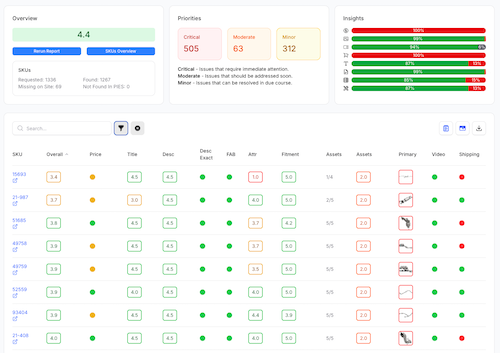
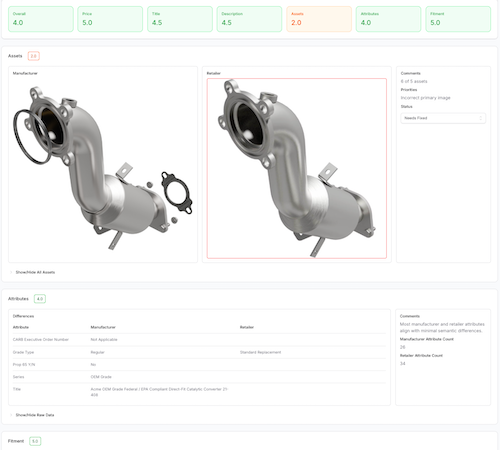
True View Audit (TVA) is designed to compare what manufacturers provide (via ACES and PIES) against what is actually displayed on retail product pages — not to “grade” the retailers.
The purpose is to create visibility into where content and catalog data is drifting and to provide a clear path to fix it.
How This Helps Retailers
Retailers often ingest product data through feeds, aggregators, and internal systems. Even with strong processes, errors happen, but manually reviewing is not scalable.
Checking for data misalignment from source data to product page and fitments will:
- Catch listing issues before they create customer complaints
- Reduce return volume caused by incorrect fitment, images, or specs
- Improve customer trust by publishing better product pages
- Create a repeatable quality assurance workflow for product content
How This Helps Manufacturers/Brand Owners
Manufacturers work hard to build clean and complete product data. But without verifying how that data appears online, errors can persist unnoticed "out in the wild."
Checking for accurate data usage of your data will:
- Protect brand reputation by ensuring listings reflect intended content
- Reduce avoidable returns caused by fitment or attribute issues
- Improve conversion by publishing more complete, accurate product pages
- Identify where rich media and assets are missing or outdated
- Collaborate with retailers using clear, actionable findings
When product data is accurate, everyone benefits.
Customers buy with confidence. Manufacturers protect their brand and reduce lost sales. Retailers reduce returns and improve performance. Support teams spend less time handling avoidable issues.
This partnership between SEMA Data and TVA is about helping the industry close the loop between “data provided” and “data published” and keeping product pages aligned as catalogs update and evolve over time.
Join us at the July 31st Ask the Experts session to get one-on-one time with Donnie La Curan of TVA. Look out for our session registration in a couple of weeks!
Reach out to the us today to get your SAMPLE REPORT!
As always, we're here to help if you have questions. Contact us at info@semadata.org.
Follow us at FaceBook and LinkedIn for more frequent news and highlights.